Malaysia’s Economy and Trade
Malaysia’s Path of Innovation and Sustainability in Southeast Asia
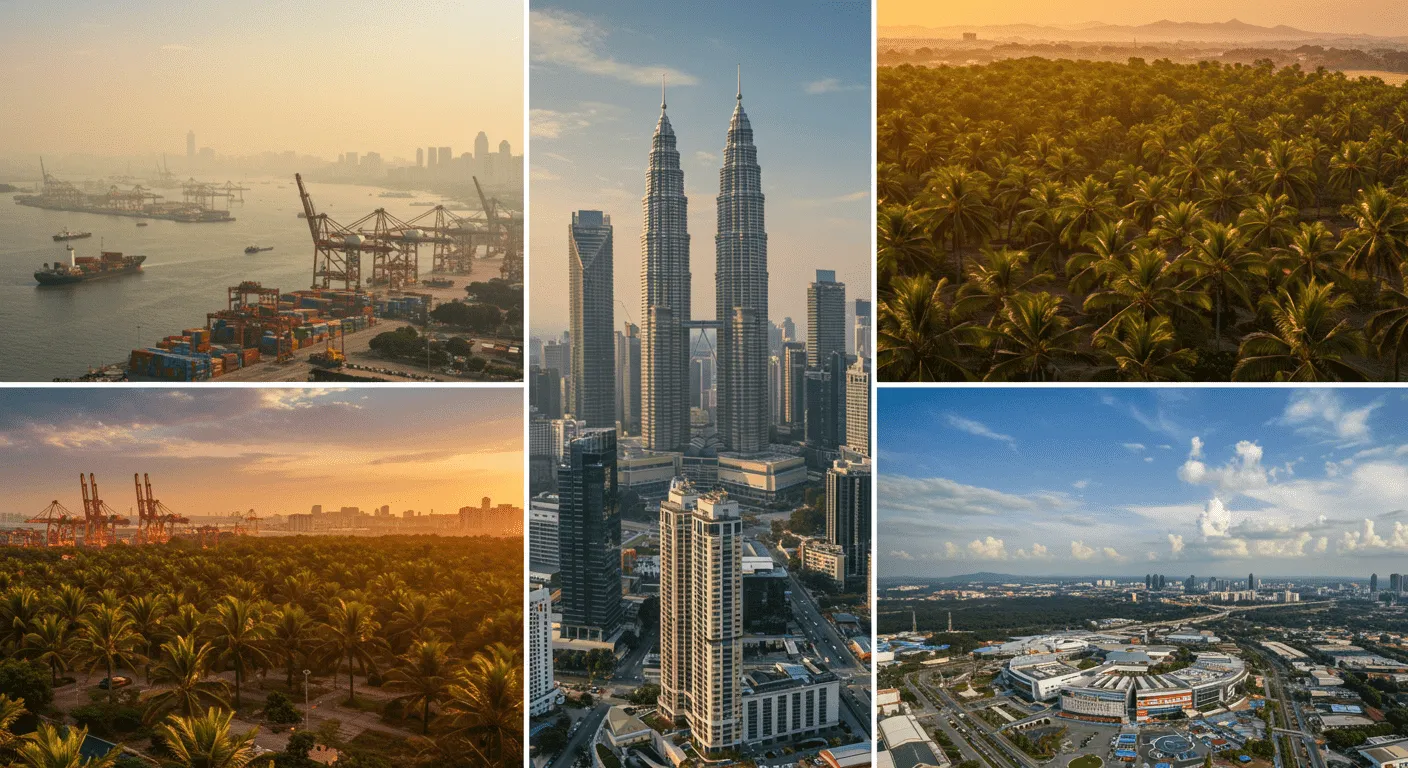
From palm plantations to digital innovation hubs, Malaysia has evolved into one of Southeast Asia’s most diversified and forward-looking economies. Blending rich natural resources with global connectivity, the country positions itself as a strategic economic player and a trusted partner in the regional and global arena.
Natural Resources and Key Economic Sectors
Once known for its tin, rubber, and timber, Malaysia now leverages its oil, gas, and palm oil industries while diversifying into manufacturing and services. It remains a leading global exporter of palm oil and continues to strengthen its industrial and service sectors.
Manufacturing and Industrial Growth
Industrial zones like Klang Valley host multinational factories specializing in electronics, automotive, and medical devices. Malaysia ranks among the top semiconductor producers, drawing increased foreign investment into the sector.
International Trade and Smart Integration
Malaysia’s active role in ASEAN, RCEP, and its trade ties with China, Japan, and the EU place it at the heart of Asian commerce. Ports like Port Klang and KLIA airport provide state-of-the-art trade logistics infrastructure.
Sustainable Development and the Digital Shift
Through Five-Year Plans and initiatives like Malaysia Digital and the Green Tech Roadmap, the government supports innovation, education, and digital entrepreneurship—laying the foundation for a resilient economy.
Investment and Economic Tourism
Political stability, skilled workforce, and competitive taxation attract foreign investors in fintech, tourism, and green energy. Special Economic Zones like Iskandar Malaysia have become hotbeds for strategic investment.
Challenges and Future Outlook
Despite progress, Malaysia faces export dependency and rural inequality. However, its focus on digital transformation, financial transparency, and knowledge economy paves a promising road ahead.
Conclusion
Malaysia’s economy is a study in transformation—balancing tradition with innovation. With sound policies, international cooperation, and a dynamic talent pool, it sets an example for emerging economies globally.