
Philippines Labor Force in July 2025

Filipinos aged 15 and over make up 48.64 million of the labor force overall, down from 50.06 million in July 2024. Joblessness Rate of unemployment: 5.3%, up from 4.1% in ... Continue reading ...

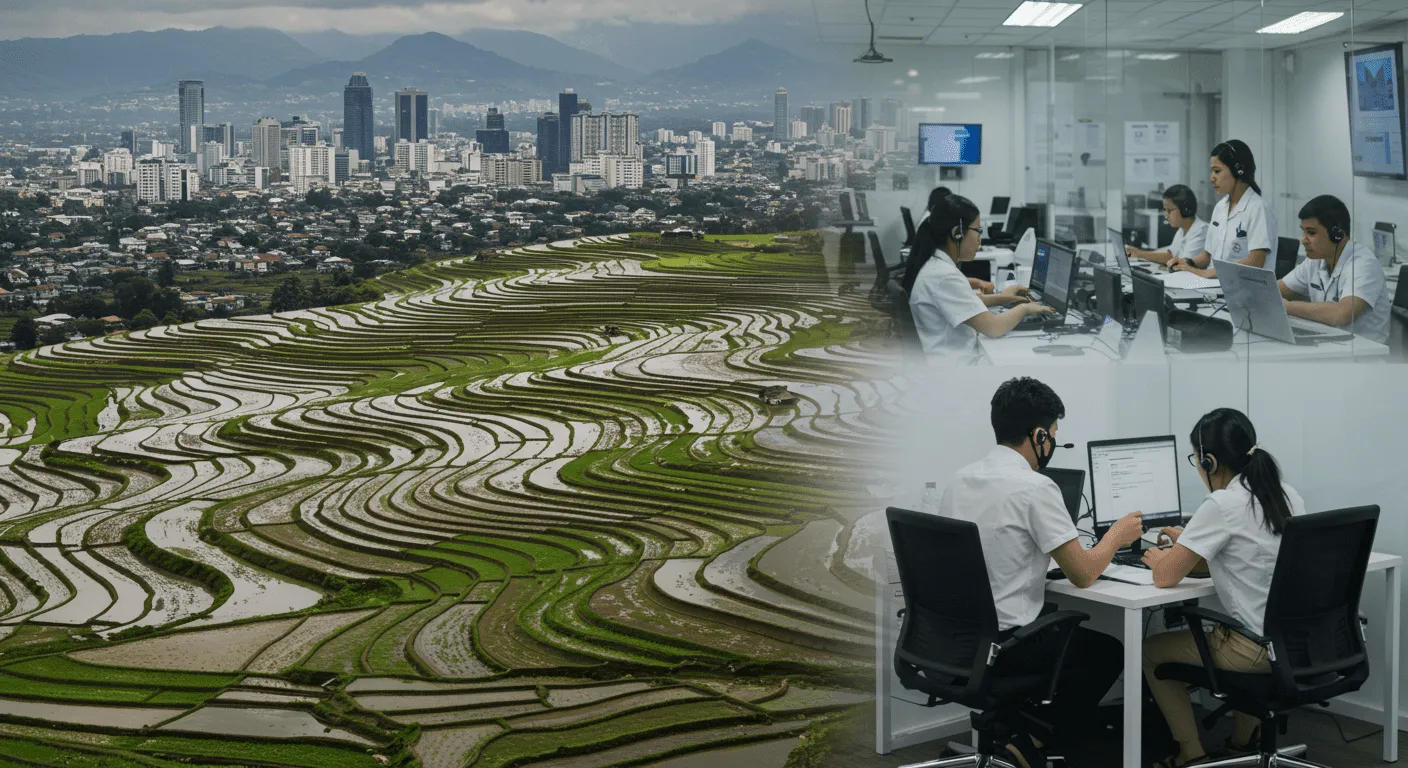
Amidst the tropical archipelago of over 7,000 islands, the Philippine economy pulses with a rhythm shaped by its deep agricultural roots and accelerating embrace of digital modernization. From rice terraces in Luzon to booming call centers in Cebu, this is an economy navigating tradition, labor migration, and innovation — all at once.
While agriculture now constitutes a smaller portion of GDP, it remains a critical livelihood source for millions. Rice, sugarcane, bananas, and coconuts are key crops that shape rural life and contribute to export earnings.
The industrial sector ranges from textiles and processed foods to high-tech electronics and semiconductors. Special Economic Zones (SEZs) have attracted global manufacturers, turning the Philippines into an assembly hub within the Asian supply chain.
The services sector, particularly in IT, telecommunications, and business process outsourcing (BPO), is a fast-growing economic engine. Manila and Cebu are global BPO hubs, supported by a young, English-speaking workforce.
Over 10 million Filipinos work abroad, and their remittances are a lifeline for the domestic economy. These funds bolster consumer spending and support the peso’s stability.
Under programs like “Build, Build, Build,” the government has launched large-scale projects in roads, ports, railways, and airports. These not only create jobs but also enhance connectivity and economic competitiveness.
Despite growth, the economy faces challenges: dependency on energy imports, vulnerability to typhoons and earthquakes, and regional inequality. Yet, a young population, rising literacy, and a growing middle class present valuable investment prospects.
Conclusion
The Philippine economy stands at a transitional point — retaining ties to its agrarian past while stepping boldly into a service-driven future. Amid global shifts and regional competition, it remains a player to watch in the Asia-Pacific economic arena.