On the map of Southeast Asia, one country stands out—not only geographically but also politically, economically, and culturally. Thailand has leveraged its unique geographic position to become a vital bridge linking East and West, North and South in this densely populated region. Unlike many neighbors, it has preserved its sovereignty and emerged as a pivotal player in regional affairs.
Strategic Location at the Heart of India and China
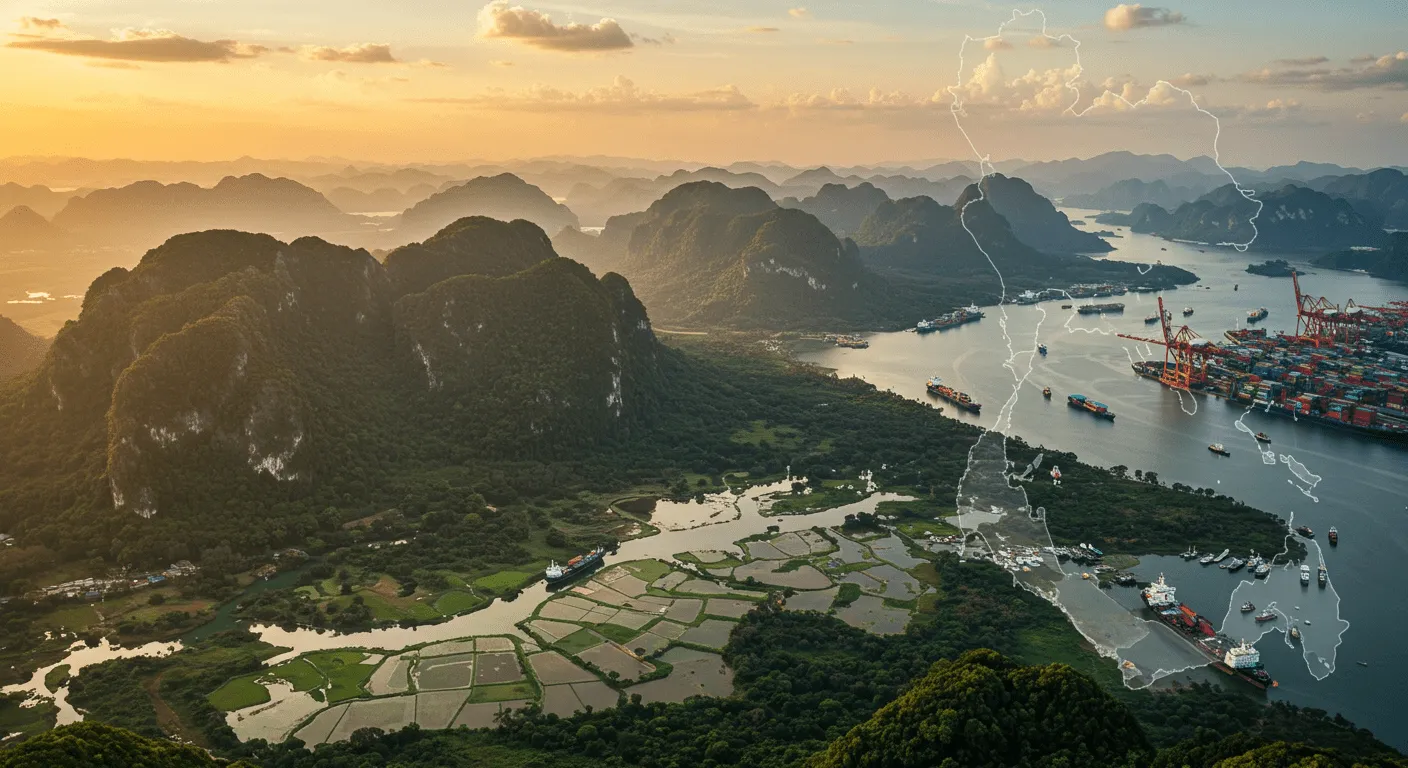
Thailand lies at the crossroads of the Indian and Chinese peninsulas, bordered by Laos and Myanmar to the north, Cambodia to the east, Malaysia to the south, and the Andaman Sea to the west. This location makes it a major land and maritime gateway for trade and transit across Southeast Asia.
Rich Climatic and Ecological Diversity
From the misty mountains of the north and the lush central plains to tropical southern beaches and eastern rainforests, Thailand’s diverse geography shapes its economy and cultural identity. This ecological variety supports agriculture, tourism, and distinct local traditions.
Gateway to the Indian Ocean and South China Sea
Thailand’s western coastline on the Andaman Sea and eastern coast on the Gulf of Thailand connect it to vital maritime corridors. These seas link East Asia to the Indian Ocean and global energy and trade routes, giving Thailand a strategic maritime role.
Bangkok: The Regional Infrastructure Hub
Thailand’s capital, Bangkok, has become one of Southeast Asia’s foremost air, logistics, and commercial hubs. Suvarnabhumi International Airport, major container ports like Laem Chabang, and extensive highways establish Thailand as a regional transport and trade nexus.
Founding Member and Active Player in ASEAN
As a founding member of the Association of Southeast Asian Nations (ASEAN), Thailand plays an active role in regional economic integration, security cooperation, and crisis management. Its geographic position strengthens its role in energy supply chains, transit routes, and regional connectivity.
Balancing China, the US, and India in Geopolitics
Thailand’s geography places it at the center of a strategic triangle involving China, India, and the United States. The country maintains close ties with China, strategic relations with the US, and growing engagement with India, skillfully navigating a balanced foreign policy to benefit its national interests.
Conclusion
Thailand’s geography is a vibrant mix of natural diversity and geopolitical importance. From northern mountains to southern shores, from transit routes to regional summits, Thailand plays a dynamic role at the heart of Southeast Asia—not only ecologically and economically but also as a key geopolitical actor.