

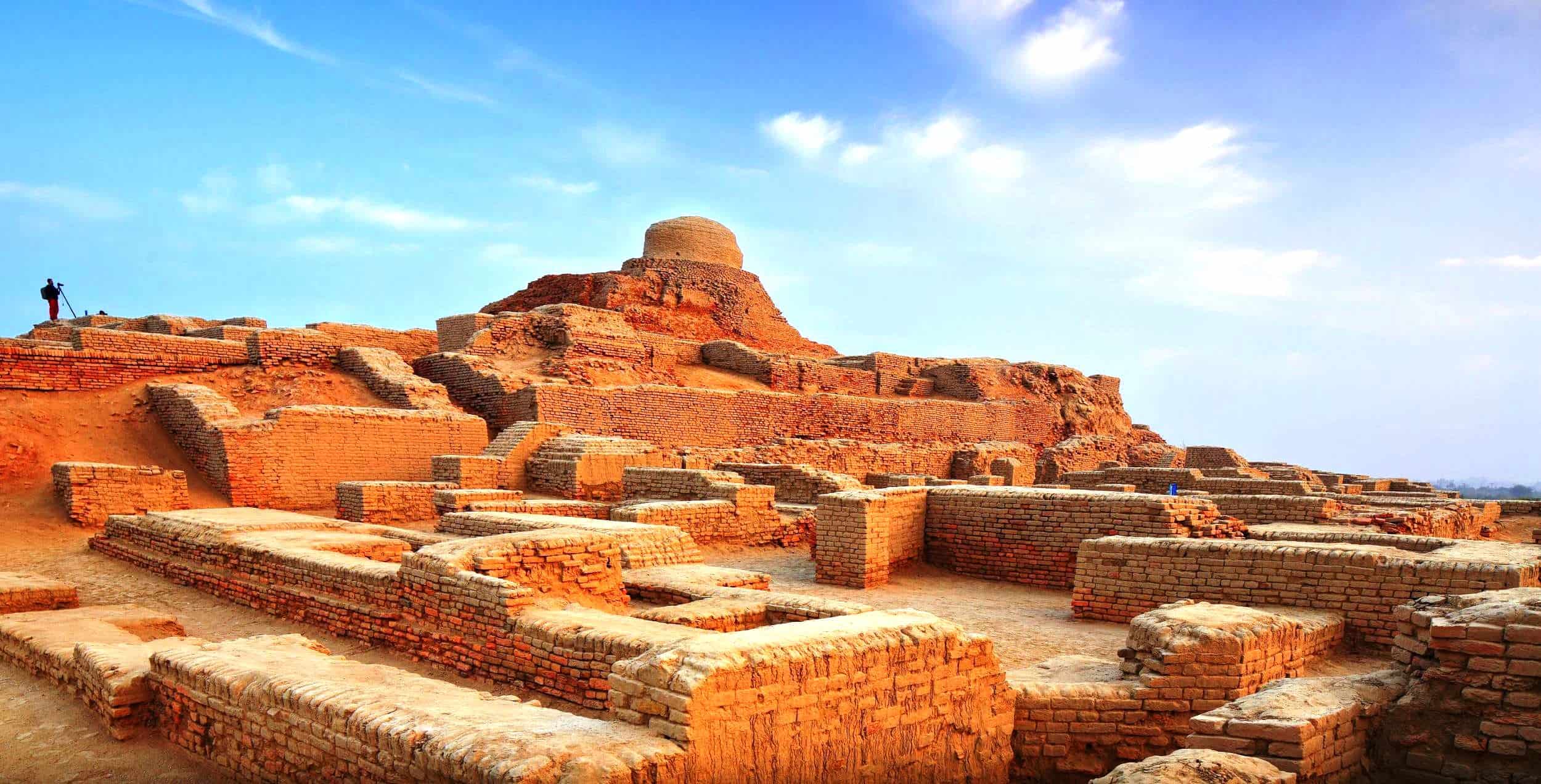
Mohenjo-Daro, one of the most significant archaeological sites in the world, stands as a testament to the grandeur of the Indus Valley Civilization. Located in the southern region of Pakistan, near the Indus River, Mohenjo-Daro was once one of the largest and most advanced cities of the ancient world. With a history spanning over 4,500 years, it remains a crucial site for understanding early human civilization. In 1980, it was designated as a UNESCO World Heritage Site, highlighting its importance as a cultural and historical treasure.
History and Discovery of Mohenjo-Daro
Mohenjo-Daro was discovered in 1922 by British archaeologist Sir John Marshall, though its significance was only fully recognized much later. This ancient city, which flourished around 2500 to 1900 BCE, is a key part of the Indus Valley Civilization, one of the earliest urban cultures in the world. Excavations have uncovered a city that was highly advanced for its time, featuring well-planned streets, sophisticated drainage systems, and a thriving trade network.
Architectural Features and Urban Planning
One of the standout features of Mohenjo-Daro is its remarkable urban planning. The city was constructed using standardized fired-brick blocks, and its streets were laid out in a grid pattern, showcasing a level of organization that was ahead of its time. The city’s layout included wide streets, residential areas, public spaces, and well-planned drainage systems. The sophisticated drainage system, which is one of the earliest examples of urban sanitation, carried waste through underground pipes, ensuring clean and healthy living conditions for its inhabitants.
Daily Life in Mohenjo-Daro
Artifacts found at Mohenjo-Daro offer a glimpse into the daily lives of its inhabitants. The people of Mohenjo-Daro were primarily engaged in agriculture, cultivating crops like wheat, barley, and cotton. Additionally, the city was a major center for trade, with evidence of extensive commercial networks stretching from the Persian Gulf to Central Asia. The discovery of seals and pottery suggests that the people of Mohenjo-Daro were skilled artisans, and they engaged in trade with regions as far as Mesopotamia and Iran.
Archaeological Discoveries
Excavations at Mohenjo-Daro have revealed numerous artifacts, including houses, temples, seals, and pottery. One of the most important discoveries is the Indus script, a series of symbols found on seals that have yet to be fully deciphered. These seals provide valuable insight into the cultural and commercial activities of the people, shedding light on their trade practices and societal organization.
Cultural and Historical Significance
Mohenjo-Daro is not only significant for its archaeological value but also for its role in understanding the development of urbanization and civilization. The city’s advanced planning, technological achievements, and thriving trade networks are evidence of the Indus Valley Civilization’s intellectual and cultural sophistication. Preserving Mohenjo-Daro is vital for future generations, as it serves as a crucial link to the early stages of human history and the origins of urban life.
Visiting Mohenjo-Daro
A visit to Mohenjo-Daro offers a unique opportunity to step back in time and experience one of the oldest and most advanced cities of the ancient world. The site is open to tourists, with guided tours available to explore the ruins and learn about the significance of the various structures and artifacts found there. Additionally, nearby museums display the many artifacts uncovered during excavations, providing visitors with a deeper understanding of the city’s history and culture.


بدون دیدگاه