

Afghanistan is home to a rich tapestry of architectural marvels, each telling a story of its glorious past. From ancient Buddhist relics to Islamic masterpieces, the country’s historical sites reflect the enduring legacy of its diverse cultures and civilizations. Here, we explore some of the most iconic architectural landmarks in Afghanistan, each contributing to the nation’s profound history.
Bamiyan Valley: The Buddhas of Afghanistan
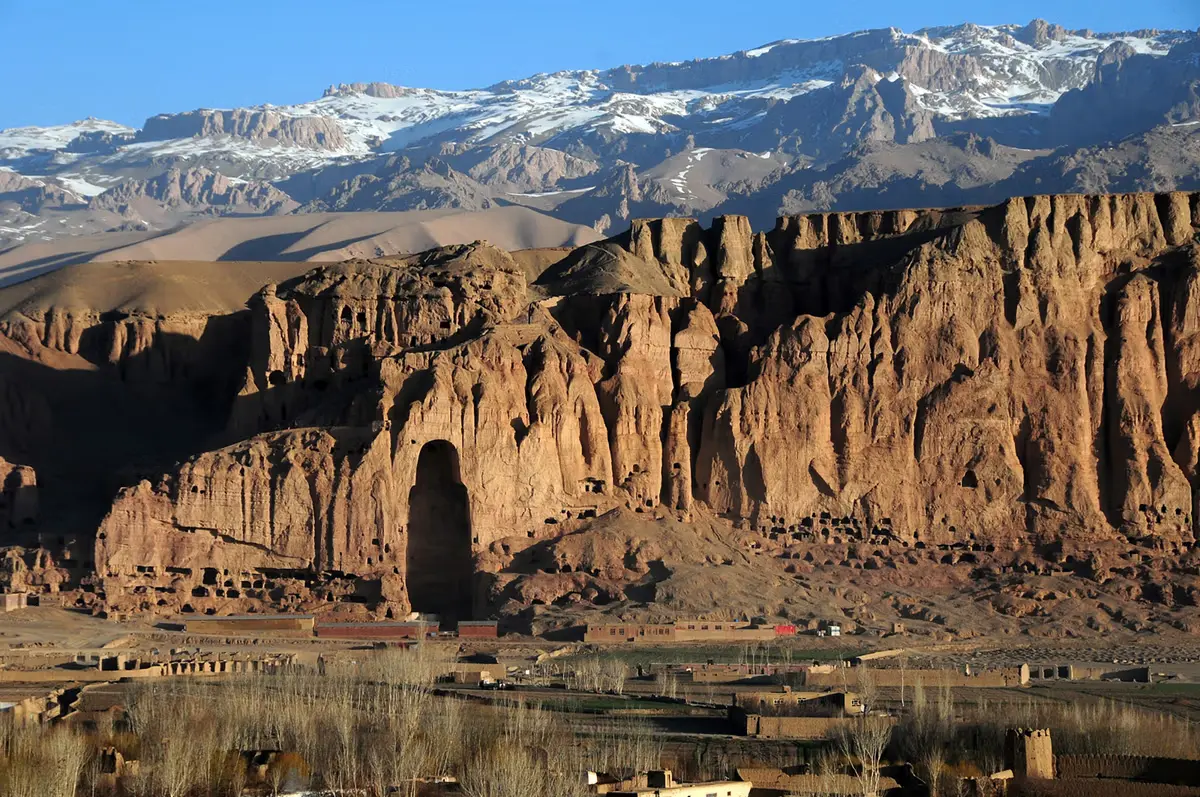
Once home to the awe-inspiring Giant Buddhas, the Bamiyan Valley stands as a testament to Afghanistan’s Buddhist heritage. These monumental statues, which were tragically destroyed in 2001, continue to symbolize Afghanistan’s historical role as a crossroads of ancient trade and culture along the Silk Road. The valley itself, surrounded by dramatic cliffs and deep valleys, remains one of the most powerful symbols of Afghanistan’s rich and diverse past.
Minaret of Jam: An Islamic Masterpiece
The Minaret of Jam, located in the remote Ghor province, is a striking example of 12th-century Islamic architecture. Standing at over 65 meters, the minaret showcases the intricate craftsmanship of the Ghurid dynasty, featuring detailed inscriptions and geometric patterns. Its towering structure, a UNESCO World Heritage site, not only highlights Afghanistan’s architectural brilliance but also stands as a symbol of its cultural and religious significance.
Babur Garden (Bagh-e Babur): A Mughal Legacy in Kabul
The Babur Garden in Kabul is one of Afghanistan’s most celebrated historical landmarks. Built by the founder of the Mughal Empire, Emperor Babur, this serene garden represents the classical Mughal style of landscaping, with its symmetrical layout and water features. The garden, which also serves as Babur’s final resting place, offers a peaceful retreat and a glimpse into the grandeur of the Mughal era. Its well-preserved design continues to attract visitors, offering a unique connection to Afghanistan’s royal past.
Timur Shah Mausoleum: Insights into Timurid Architecture
Located in the city of Kandahar, the Timur Shah Mausoleum showcases the grandeur of Timurid architecture. Built in the 18th century, this site stands as a tribute to one of the prominent rulers of Afghanistan. Featuring stunning tile work and intricate designs, the mausoleum provides a glimpse into the artistic and architectural legacy of the Timurid dynasty that shaped much of Central Asia’s history.
Herat’s Jameh Mosque: Legacy of Islamic Architecture
The Jameh Mosque of Herat is one of Afghanistan’s finest examples of Islamic architecture. Built during the Timurid era in the 15th century, it is renowned for its beautiful tile work and intricate calligraphy. The mosque’s design, which blends Persian and Islamic influences, reflects the sophisticated architectural traditions of the time. It remains a major religious and cultural center in the region and is an essential part of Afghanistan’s architectural heritage.


بدون دیدگاه