
Iran, with its rich history and culture, is home to numerous traditional festivals and rituals that reflect the deep values, beliefs, and connection of its people to nature, history, and spirituality. From Nowruz, the Persian New Year marking the beginning of spring, to ancient celebrations like Chaharshanbe Suri and Sizdeh Bedar, each of these events represents life, renewal, and unity. These festivals are not only rituals celebrating time and seasons but also provide opportunities for joy, spiritual renewal, and strengthening social bonds. In this piece, we will introduce some of the most significant Iranian festivals and traditions, each with its unique story and profound message for humanity.
1. Nowruz – The Persian New Year of Renewal
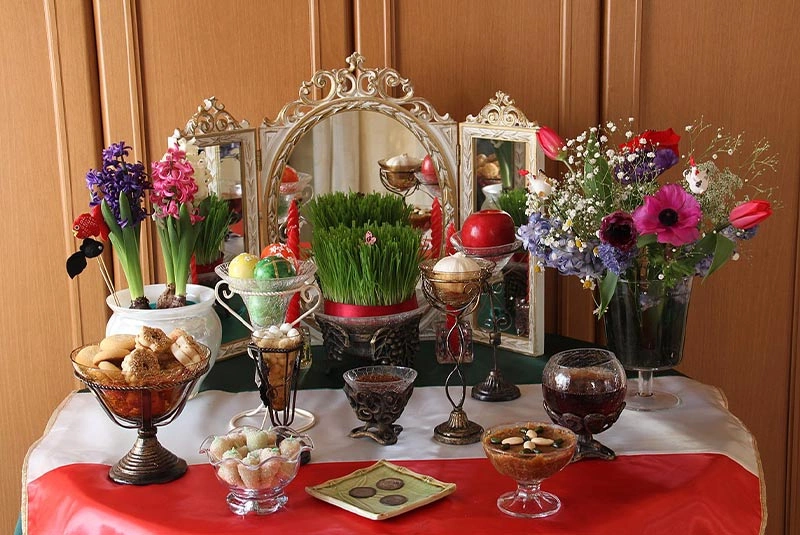
Celebrated on the spring equinox (around March 21), Nowruz marks the beginning of the Persian calendar year and the rebirth of nature. Families prepare the Haft‑Seen table with seven symbolic items representing health, prosperity, and love. More than a holiday, Nowruz is a philosophy — a time to cleanse the soul, forgive, and start anew.
2. Chaharshanbe Suri – The Fire Festival of Purification
On the last Wednesday night before Nowruz, Iranians leap over bonfires while chanting ancient phrases wishing for brightness and health. This fiery celebration, Chaharshanbe Suri, symbolizes purification and joy, burning away the past year’s negativity. Music, dance, and fireworks fill the night sky with hope for the coming year.
3. Sizdeh Bedar – Nature Day and the 13th Day of Nowruz
Sizdeh Bedar, observed on the 13th day after Nowruz, invites everyone outdoors — parks, gardens, mountains — for joyful picnics. It’s a symbolic farewell to the Nowruz festivities and an offering to nature, believed to cast away bad luck and strengthen harmony with the earth.
4. Yalda Night – Poetry and Light on the Longest Night
Yalda Night (Shab‑e Yalda), falling on December 21, celebrates victory of light over darkness as winter begins. Families gather to read Hafez’s poetry, share pomegranates, nuts, and watermelon, and stay up late surrounded by laughter and storytelling. It’s a magical night that binds tradition with deep emotional connection.
5. Mehregan – Festival of Love, Equality, and Justice
Rooted in Zoroastrian heritage, Mehregan honors Mehr (Mithra), the deity of friendship and light. Celebrated in autumn, it represents love, gratitude, and justice. People wear purple garments, prepare sweet dishes, and exchange gifts — reminding all that compassion and fairness are timeless Iranian values.
6.Tirgan Festival – Water and Archery Traditions
Tirgan, held in mid‑summer, celebrates water, rain, and the triumph of truth. Colorful ribbons, water splashing, and archery ceremonies echo legends of peace and destiny. The festival’s ancient custom of clay pot fortune‑telling adds a playful spiritual touch to its joyful gatherings.
7. Sadeh Festival – Fire Over Darkness
Observed about 50 days before Nowruz, Sadeh is one of Iran’s oldest fire festivals, symbolizing humanity’s victory over cold and evil. Zoroastrians light massive bonfires that illuminate winter nights — a radiant tribute to warmth, hope, and the eternal light within humanity.
8. Kashan Rosewater Festival – Fragrance of Spring
Every May, the town of Kashan blooms with the sweet scent of Damask roses. During the Rosewater Festival, residents harvest petals and distill aromatic rosewater using traditional copper stills. The event attracts tourists worldwide, capturing Iran’s artistry and eco‑heritage in full bloom.
9. Gonbad‑e Kavus Kite Festival – Dreams in the Sky
In northern Iran, the Kite Festival of Gonbad‑e Kavus fills the air with flashes of color and imagination. Families craft and fly kites symbolizing freedom, dreams, and wishes. The celebration promotes community creativity and joy — where both children and adults share in the enlightenment of play.
10. Nakhl‑Gardani Ceremony – Spiritual Devotion in Yazd and Kerman
A moving display of religious and artistic grandeur, Nakhl‑Gardani commemorates the martyrdom of Imam Hussein during Muharram. Large wooden “nakhl” structures, representing the Imam’s coffin, are carried by hundreds of men through the streets — symbolizing solidarity, sacrifice, and collective faith.


بدون دیدگاه