

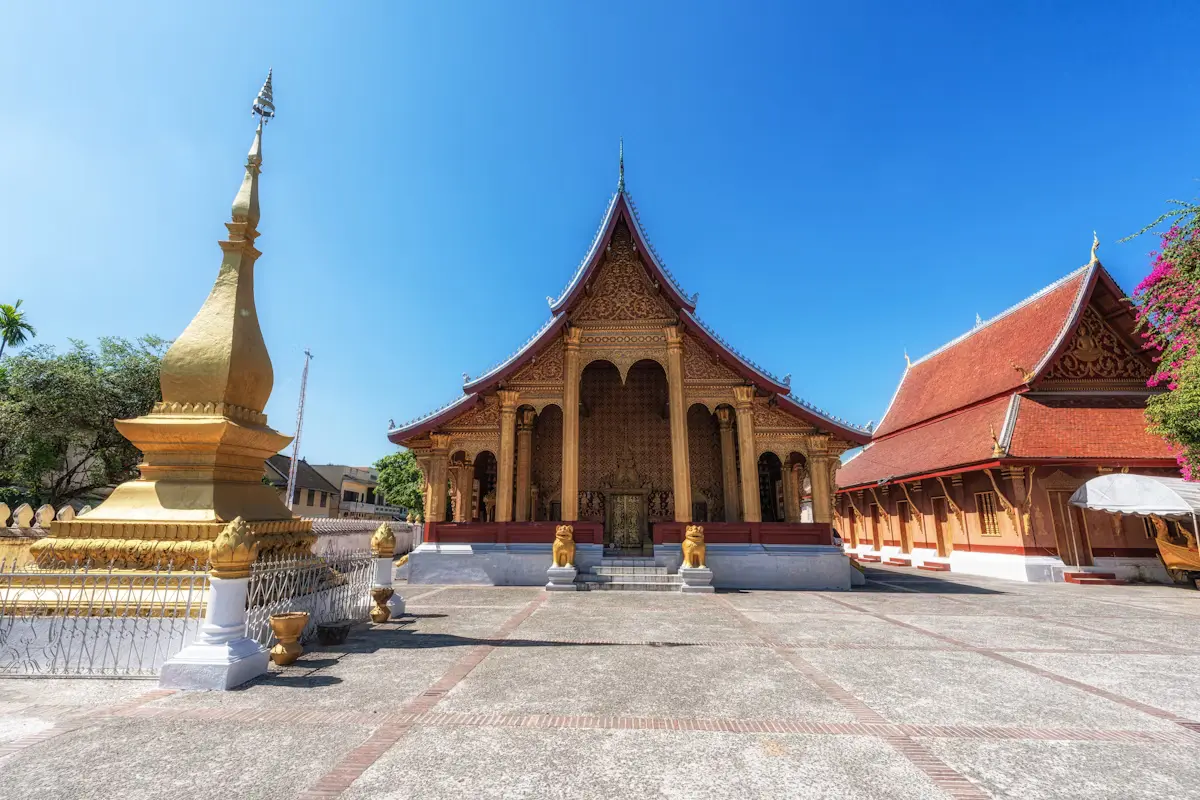
Wat Phou, an ancient and revered temple in Laos, stands as a testament to the rich history and cultural heritage of the region. Located in the southern part of Laos, this UNESCO World Heritage site sits majestically on a hill overlooking the Mekong River. The temple dates back over a thousand years, with its origins rooted in the Khmer Empire, reflecting a blend of spiritual and architectural significance.
Architectural and Historical Significance
Wat Phou is an outstanding example of Khmer architecture, showcasing the grandeur of the empire that once dominated Southeast Asia. The temple complex includes stone structures, sculptures, and intricately decorated walls that depict stories of gods, nature, and devotion. The architectural style of Wat Phou shares many similarities with other Khmer temples, such as Angkor Wat, with its impressive sandstone carvings and monumental structures.
The temple served not only as a center of worship but also as a symbol of the relationship between the ancient Khmer Empire and the culture of modern-day Laos. Its construction highlights the spiritual and artistic achievements of the time, making it a significant site for both historians and visitors.
Spiritual and Cultural Importance
Wat Phou continues to hold great spiritual significance in Laos. In the past, it was a site for major religious ceremonies and still remains a place of worship today. The temple’s peaceful setting provides a sense of tranquility, making it a favored spot for those seeking reflection and spiritual connection.
In addition to its religious importance, the temple complex is surrounded by lush natural beauty, offering breathtaking views of the Mekong River and the surrounding landscape. The serene atmosphere of Wat Phou makes it an ideal destination for those looking to immerse themselves in both the cultural and natural splendor of Laos.


بدون دیدگاه