

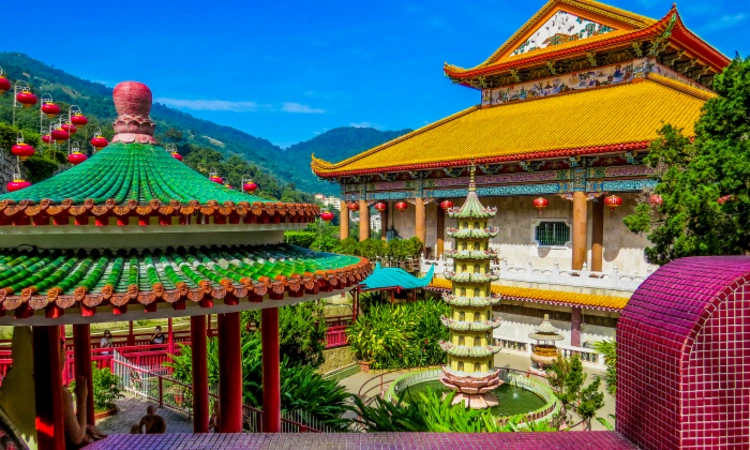
Malaysia’s heritage is a rich tapestry of millennia-old history, from ancient trade ports to colonial landmarks and sacred natural landscapes. The nation’s diverse past, influenced by traders and conquerors, has shaped its unique identity. Here are some of the most remarkable UNESCO World Heritage Sites and cultural landmarks that showcase Malaysia’s incredible history and heritage.
1. George Town, Penang (UNESCO World Heritage Site)
George Town is not just a city but a living museum that highlights the architectural fusion of traditional Malay settlements with the eclectic influences of British, Chinese, and Indian traders. The modern street art scene adds a vibrant, contemporary touch to its heritage, making it a unique destination for culture and history enthusiasts.
2. Melaka City (UNESCO World Heritage Site)
As the historic heart of the Malay world, Melaka bears the legacy of Portuguese, Dutch, and British colonization. Key attractions include Stadthuys (Red Square) and the ruins of St. Paul’s Church, which provide insight into the region’s colonial history and its significant role in the spice trade.
3. Lenggong Valley Archaeological Heritage (UNESCO Site)
Located in Perak, the Lenggong Valley is one of the world’s oldest known Paleolithic sites. The valley is home to ancient Neolithic cave paintings and early evidence of human settlement in Southeast Asia. It offers a deep, historical perspective on human evolution and prehistorical life in the region.
4. Kuala Lumpur City Gallery & Sultan Abdul Samad Building
While Kuala Lumpur embraces modernity, the area around Merdeka Square is steeped in colonial history, showcasing stunning Moorish-inspired architecture. The Kuala Lumpur City Gallery, home to the iconic “I ♥ KL” sign, marks the birthplace of modern Malaysia’s identity.
5. Batu Caves (Selangor)
An important Hindu shrine complex, Batu Caves features massive statues, including the world’s tallest statue of Lord Murugan. The caves hold deep significance for Malaysia’s Indian community, particularly during the annual Thaipusam festival, reflecting the vibrant and living heritage of the country’s Hindu traditions.
6. Perak Man and the Lenggong Caves
The discovery of the Perak Man skeleton, over 11,000 years old, in the Lenggong Caves highlights the region’s archaeological importance. This discovery is vital for understanding human evolution in Southeast Asia and the region’s early history.
7. Limbang & Sarawak Museum (Borneo)
In East Malaysia, the Limbang and Sarawak Museum preserve the diverse heritage of the Dayak, Iban, and other indigenous tribes of Borneo. Exhibits of traditional crafts, longhouse architecture, and ancient burial rituals offer a unique insight into East Malaysian culture.
8. Kuala Lumpur Railway Station
A striking example of Moorish-Indo-Saracenic architecture, the Kuala Lumpur Railway Station—often called the “Taj Mahal of the East”—served as the city’s primary transportation hub for decades. This historic structure symbolizes the transition from Malaysia’s colonial past to its modern-day capital.
9. Fujian Ancestral Temples (Penang & Melaka)
Scattered throughout Malaysia, Fujian Ancestral Temples (including the Khoo Kongsi in Penang) are architectural gems. These temples highlight the cultural heritage and mercantile history of various Chinese clans, playing an essential role in understanding the migration and settlement patterns of the Chinese in Malaysia.
10. Kampung Kling Mosque (Melaka)
One of Malaysia’s oldest functioning mosques, Kampung Kling Mosque blends Sumatran, Chinese, and European architectural influences. This mosque beautifully represents the diverse and harmonious religious and cultural life that shaped early Malaysian society.


بدون دیدگاه