
Gugak refers to the traditional music and dance of Korea, deeply intertwined with the country’s history and culture. Its roots trace back to the 15th century during the reign of King Sejong the Great, who reorganized court music and created the first musical notation system in East Asia. King Sejong’s efforts included developing the “Jeongganbo” system of musical notation, ordering the preservation of traditional Korean instruments, and personally composing works such as “Jeongmyo Jeryak” (recognized as a UNESCO Intangible Cultural Heritage in 2001) and “Yeominrak” (meaning “sharing joy with the people”). The term “gugak” was coined by the Institute of Korean Music (Jangkwan) to describe uniquely Korean music after the introduction of foreign music in the late Joseon Dynasty.
History and Significance of Gugak in Korean Culture
Gugak holds significant historical importance as a reflection of the royal and commoner culture of Korea. It includes a wide range of musical and dance forms, from royal court performances to folk music enjoyed by ordinary people. Royal court music like Jongak and Jongga, folk music such as pansori and sanjo, and court dances like Jeongjae, Salpuri, and Seongmo were all integral to Korean tradition. Gugak also covers shamanic and Buddhist music, including forms like Beompae, alongside various types of folk songs, pansori, Japga, and sanjo. Among these, the song “Arirang,” which was inscribed as a UNESCO Intangible Cultural Heritage in 2012, represents the heart of Korean emotion. The song has many regional variations, passed down through generations in places like Miryang, Jeongseon, and Jindo.
Traditional Instruments in Gugak
The traditional instruments used in Gugak are diverse and integral to its sound. These instruments include over 60 different types, with string instruments like the gayageum, jeomungu, and ajaeng, wind instruments such as the daegeum, piri, and danso, and percussion instruments like the buk, janggu, and jing. These instruments are played in various combinations depending on the music being performed, contributing to the rich and varied nature of Gugak.
Folk Dance in Gugak
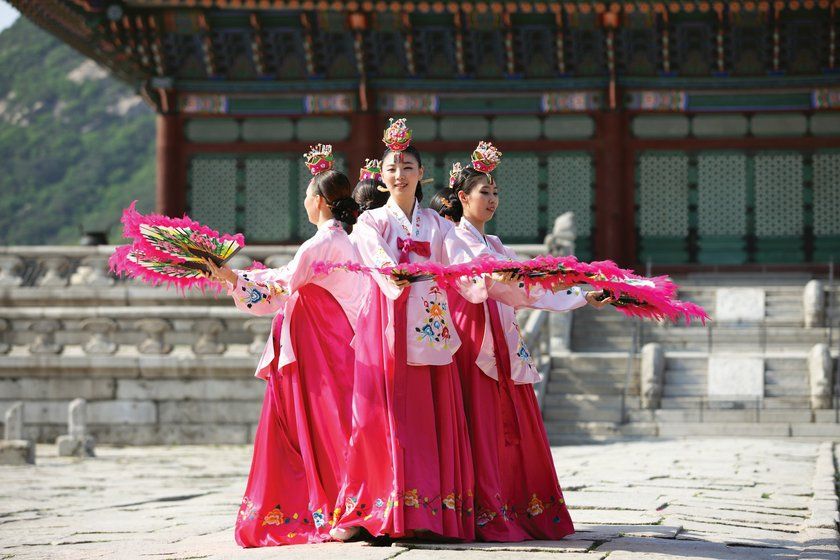
Folk dance is another vital aspect of Gugak, with various dances passed down through generations. These dances, such as the Salpuri, Rode, Tappyeongmo, and Halyang, often tell a story or convey a message. Some dances involve the use of fans, while others incorporate swords. The Seongmo dance, derived from Buddhist rituals, has also been passed down through generations. The most iconic of these dances are the mask dance, which satirizes the Yangban class through masked performances, and the Nongak, a communal dance performed by farmers to pray for good harvests. Instruments like gongs and drums are used in these performances to enhance the festive and spiritual atmosphere.


بدون دیدگاه